
The Nicene Creed Celebrating 1700 years of Enduring Faith and Legacy
Author: Samuel Thambusamy
Publisher: ThinkFutureTense
Year of publication: 2025
Reviewed by: JN Manokaran
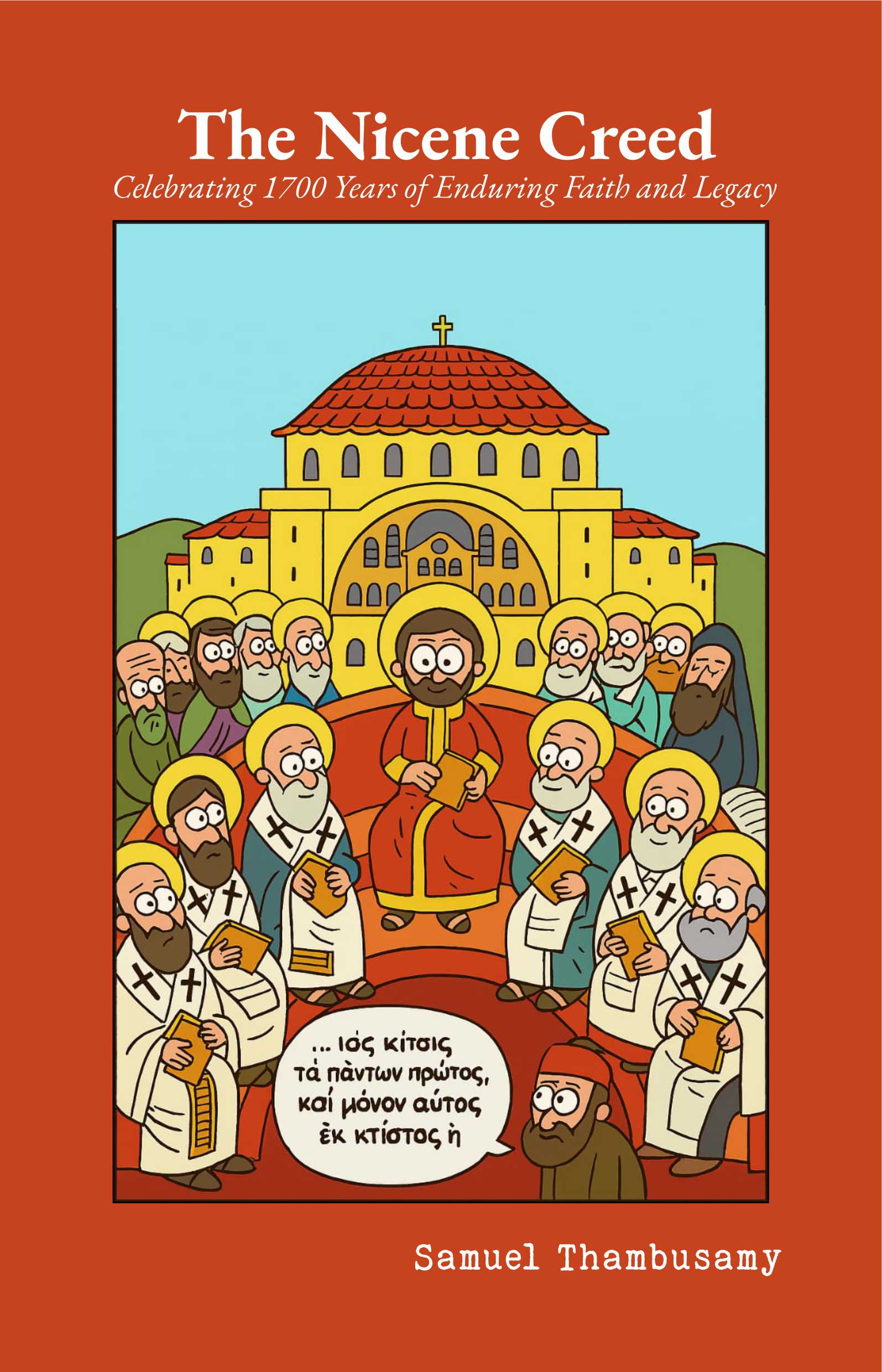
Samuel Thambusamy has wisely contributed to the younger generation by writing this book to help them to understand the historic faith and legacy. As a theologian, he always strives to provide enduring truths in simple sentences, for readers to be enthusiastically engaged.
Persecution ceases
After three centuries of persecution, Emperor Constantine legalized Christianity in the year 313. The ancient church council that met in Nicaea declared the divinity of Christ and created a creed that has shaped the Christianity. 300 bishops, some of whom had the scars and marks of persecution gathered in the council. The creed captures in best possible human words: Who is Jesus?
Myths
Though the historical events are evident, myths and legends were added down the history. The author debunks five common myths, and brings the truth in light. The myths are: 1) The council decided on the books of the Bible; 2) The divinity of Jesus was invented; 3) the vote at Nicaea was close. 4) Constantine imposed his belief on the church; 5) It was politics and power and not about faith. Sadly, these myths are still being spread as conspiracy theories feel exciting.
Historical background
In the city of Alexandria, a priest named Arius preached that Jesus was the Son of God, but not eternal, not equal to father, created before time, still created. Arius composed a catchy song that all including children began to sing. Bishop Alexander publicly admonished Arius, and demanded he repent. This became a theological debate all over.
Athanasius
Besides Bishop Alexander, Athanasius, a decan barely thirty years old, wrote a powerful rejoinder to Arius. Athanasius became the chief defender of Nicene theology and creed, and was exiled five times but never silenced. The author explains the creed with clarity.
Inside Nicaea
The question was debated: Is Jesus truly God or just a created being? Arius with a sharp mind and calm manner argued that Jesus’ divinity was not eternal. Bishop Alexander and Athanasius argued passionately and pushed back Arius’ arguments. Out of 318 bishops present 316 signed the creed. The creed became the theological backbone of orthodox Christianity. The council ensured that the Church didn’t collapse in confusion, and the divinity of Christ remains to the central of Christian faith.
Courageous leaders
Standing for truth needs courage and it costs, and the leaders suffered to bless the future generations.
It matters today
We live in a world of shifting truths and fluid beliefs. The creed is relevant today because: 1) It anchors us in faith; 2) It guards the gospel; 3) It unites the global church; 4) It calls us to faithfulness; 5) It shapes our worship.
Conclusion
This is a contemporary book that connects history to us. The author has done a splendid job, making it simple and relevant. All Christians, especially the youngsters should read this book.